
Best Velotric Cargo and Passenger E-Bikes: Capacity Without Guesswork is written for families and errand riders who need to carry gear or passengers without misreading payload numbers. It is an editorial, specification-based buyer's guide, not a claim that Lucas Anderson personally tested every model or scenario. The analysis uses current official information for Velotric GoMad, Velotric Triker, Velotric Fold 1 Plus, Velotric Discover 3 and concentrates on the decisions that remain after a shopper knows the motor and battery numbers.
Prices, bundles, inventory, software, and policies can change. The product pages and checkout observed during this August 2026 update are a snapshot, while Velotric's current page and the actual seller's written terms remain the final authority. That is why this guide separates stable ownership questions from temporary promotions.
There is no universal winner
A shortlist should eliminate poor fits before ranking specifications. The best model for one rider can be the wrong model for another when height, combined load, stairs, terrain, mobility, or service access changes.
Questions this guide answers
- GoMad rack
- Triker basket
- Fold 1 Plus
- Discover 3
- Capacity math
- Child safety
- Braking
- Storage
- Buyer questions
- Final recommendation
Current model snapshot
| Model | Official price checked | Useful specifications |
|---|---|---|
| Velotric GoMad | $1,999 | 750W hub motor, 85Nm torque, 801.6Wh battery, up to 75 miles, 77 lb, 500 lb capacity |
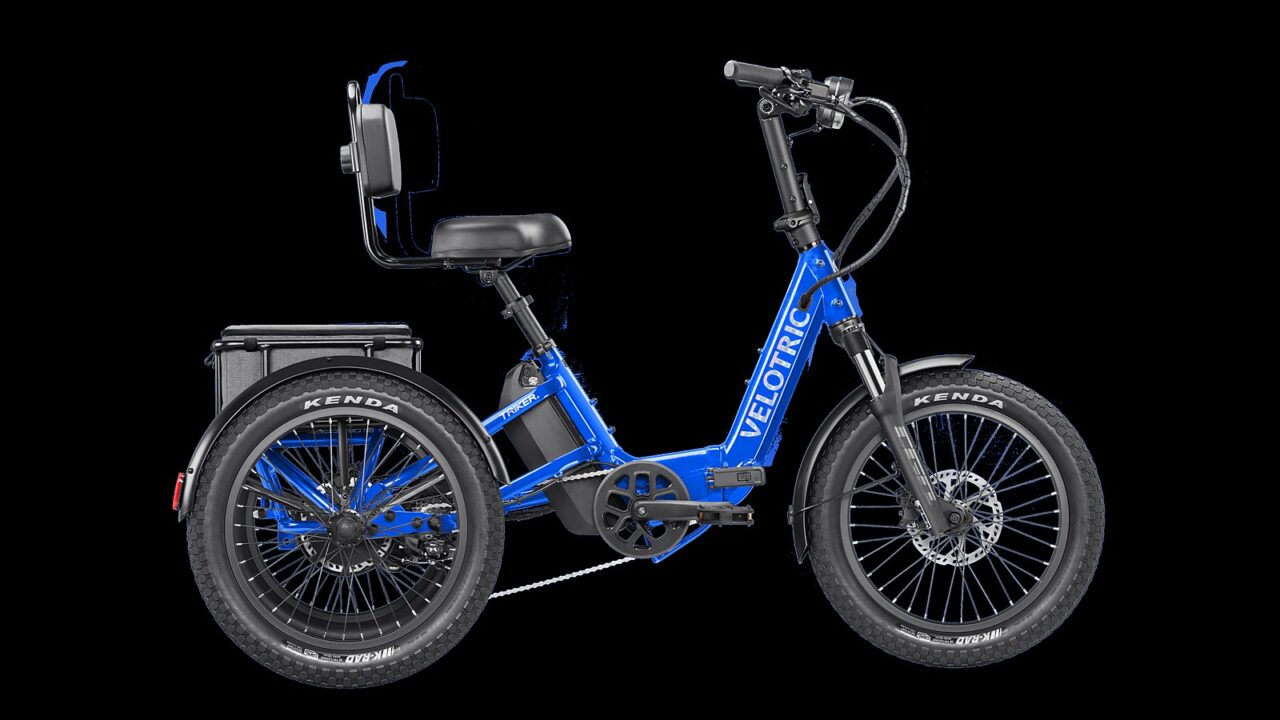
| Velotric Triker | $2,499 | 750W hub motor, differential rear axle, up to 60 miles, 20 mph, 85.8 lb, 500 lb capacity |
| Velotric Fold 1 Plus | $1,449 | 750W hub motor, 608Wh battery, up to 68 miles, 63 lb, 450 lb capacity |
| Velotric Discover 3 | $1,999 | 750W rear hub motor, 75Nm torque, 730Wh battery, up to 80 miles, 61 lb, 440 lb capacity |
Confirm current specifications, inventory, and included equipment on Velotric GoMad official page, Velotric Triker official page, Velotric Fold 1 Plus official page, Velotric Discover 3 official page.

GoMad rack
its 176-pound MIK HD rack and passenger kits make it the clearest two-wheel passenger platform in the lineup. Practice in a low-risk area and verify local rules before adding traffic, passengers, cargo, steep grades, or higher class settings.
The practical comparison should include the completed bike, not an empty showroom setup. Locks, bags, passenger hardware, fenders, mirrors, alternate posts, and transport equipment can change weight, fit, clearance, and cost.
Write a progression plan before the first busy-road ride. It should include low-assist starts, controlled stops, emergency braking, shoulder checks, tight turns, hill starts, and any cargo or passenger setup in a quiet practice area. Add only one new source of speed, load, traffic, or poor traction after the previous step feels repeatable.

Triker basket
three-wheel stop stability and a 500-pound total help cargo, while cornering demands low and centered loading. Treat every published maximum as a limit under defined conditions, not as a daily operating target. Speed, load, wet surfaces, and unfamiliar handling should be introduced separately.
For Velotric GoMad, Velotric Triker, Velotric Fold 1 Plus, Velotric Discover 3, verify this point using the exact frame, configuration, and included equipment being purchased. Product-family assumptions can hide differences in model year, size, accessory rating, or software behavior.
Confirm the lowest applicable component rating and the rider's ability to control the loaded bicycle, not just the large total-payload number in a specification table. Braking distance, tire pressure, rack limits, passenger hardware, local rules, and the distribution of weight can become limiting before the frame's headline capacity is reached.
Fold 1 Plus
high total capacity does not turn the standard rear rack into a passenger seat; use only approved configurations. Treat every published maximum as a limit under defined conditions, not as a daily operating target. Speed, load, wet surfaces, and unfamiliar handling should be introduced separately.
Turn this into a test for families and errand riders who need to carry gear or passengers without misreading payload numbers: reproduce the normal route or ownership task, use representative cargo and clothing, and record what is easy or difficult before increasing speed or assistance.
Confirm the lowest applicable component rating and the rider's ability to control the loaded bicycle, not just the large total-payload number in a specification table. Braking distance, tire pressure, rack limits, passenger hardware, local rules, and the distribution of weight can become limiting before the frame's headline capacity is reached.

Discover 3
a 440-pound total and MIK HD-compatible rack support commuting cargo, not automatically an adult passenger. Treat every published maximum as a limit under defined conditions, not as a daily operating target. Speed, load, wet surfaces, and unfamiliar handling should be introduced separately.
Ask the seller for a written answer when compatibility, capacity, warranty, or included hardware affects the purchase. Save the answer with the order because a photograph or general marketing sentence is not a model-specific commitment.
Write a progression plan before the first busy-road ride. It should include low-assist starts, controlled stops, emergency braking, shoulder checks, tight turns, hill starts, and any cargo or passenger setup in a quiet practice area. Add only one new source of speed, load, traffic, or poor traction after the previous step feels repeatable.

Capacity math
combine rider, passenger, seat, rails, bags, locks, battery, and cargo, then respect the lowest component limit. Watt-hours provide the stable energy comparison; miles change with assist, speed, hills, wind, temperature, tire pressure, rider effort, and load.
The practical comparison should include the completed bike, not an empty showroom setup. Locks, bags, passenger hardware, fenders, mirrors, alternate posts, and transport equipment can change weight, fit, clearance, and cost.
Compare distance claims only after matching speed, assist, rider effort, terrain, temperature, tires, and load. A smaller efficient city bike can post a long laboratory maximum, while a high-capacity fat bike may consume more energy doing harder work. Neither headline predicts a specific commute until the operating conditions are defined.
Child safety
use age-appropriate certified seating, wheel guards, foot protection, handholds, helmets, and local-law compliance. Treat every published maximum as a limit under defined conditions, not as a daily operating target. Speed, load, wet surfaces, and unfamiliar handling should be introduced separately.
For Velotric GoMad, Velotric Triker, Velotric Fold 1 Plus, Velotric Discover 3, verify this point using the exact frame, configuration, and included equipment being purchased. Product-family assumptions can hide differences in model year, size, accessory rating, or software behavior.
Confirm the lowest applicable component rating and the rider's ability to control the loaded bicycle, not just the large total-payload number in a specification table. Braking distance, tire pressure, rack limits, passenger hardware, local rules, and the distribution of weight can become limiting before the frame's headline capacity is reached.

Braking
loaded bikes need earlier stops, more frequent pad inspection, correct tire pressure, and practice before traffic. Treat every published maximum as a limit under defined conditions, not as a daily operating target. Speed, load, wet surfaces, and unfamiliar handling should be introduced separately.
Turn this into a test for families and errand riders who need to carry gear or passengers without misreading payload numbers: reproduce the normal route or ownership task, use representative cargo and clothing, and record what is easy or difficult before increasing speed or assistance.
Confirm the lowest applicable component rating and the rider's ability to control the loaded bicycle, not just the large total-payload number in a specification table. Braking distance, tire pressure, rack limits, passenger hardware, local rules, and the distribution of weight can become limiting before the frame's headline capacity is reached.
Storage
measure the completed platform with rails, baskets, and seats because accessories can block doors, racks, and battery removal. Plan from the hardest normal day and keep a reserve until several real rides establish personal consumption. Do not schedule a necessary trip around the best-case maximum.
Ask the seller for a written answer when compatibility, capacity, warranty, or included hardware affects the purchase. Save the answer with the order because a photograph or general marketing sentence is not a model-specific commitment.
Create a conservative energy budget from battery watt-hours rather than advertised miles. Reserve at least the final part of the pack for headwinds, detours, colder weather, battery aging, and a missed charging session. After several representative rides, divide energy used by distance to establish a personal planning number for that rider and route.

Rank non-negotiables before models
Write three requirements that cannot be fixed later, such as minimum saddle height, total capacity, stair weight, battery removal, legal class, or nearby service. Eliminate any model that misses one before comparing color or promotion.
Test the top two, not every bike
Once the shortlist is small, test the exact size and closest configuration. Repeated mounting, a slow U-turn, firm braking, and walking through storage reveal more than opening additional specification tabs.
Keep the runner-up visible
A second choice makes tradeoffs clearer and protects against unavailable inventory. Record why it lost; if a promotion changes only price and not the failed requirement, it should not suddenly become the winner.
Separate rider fit from category labels
Senior, short, tall, heavy, commuter, and recreational are useful search terms but incomplete buying criteria. Replace the label with measurable needs: saddle range, reach, hand strength, balance, load, route grade, walking weight, charging access, and service distance. Those measurements create a defensible shortlist.
Recheck after adding equipment
Repeat the ranking with the actual rack, lock, bags, child or passenger system, suspension post, and transport equipment. Added hardware can raise saddle height, block a battery, exceed a rack rating, move weight rearward, or make a previously manageable bike too difficult to lift.
Keep a one-page decision record
Give every candidate a pass or fail for the non-negotiables, then score only the remaining bikes for comfort, route reserve, storage, charging, service, security, and first-year cost. Keep the measurements beside the score. A model eliminated for fit, control, capacity, or transport should not reappear merely because its price changes at checkout.
For Velotric GoMad, Velotric Triker, Velotric Fold 1 Plus, Velotric Discover 3, begin that record with gomad rack and finish with storage. The buyer described here is families and errand riders who need to carry gear or passengers without misreading payload numbers, so the written decision should name the normal route and ownership constraint in plain language. Date the record, save the official page or written seller answer used for changing specifications, and revisit it before the return period closes. If the chosen bike fails a non-negotiable after delivery, address the mismatch promptly rather than trying to justify the purchase with a feature that was never part of the original need.
Continue the research
Use GoMad buying guide, accessory guide to compare the fit, route, safety, and ownership questions from another angle before checkout.
Buyer questions
Why does gomad rack matter before buying?
its 176-pound MIK HD rack and passenger kits make it the clearest two-wheel passenger platform in the lineup. Confirm the current model specification and test the requirement in the real route, fit, or ownership setting rather than relying on the headline alone.
What should I verify about fold 1 plus?
high total capacity does not turn the standard rear rack into a passenger seat; use only approved configurations. Confirm the current model specification and test the requirement in the real route, fit, or ownership setting rather than relying on the headline alone.
Can child safety change the best model?
use age-appropriate certified seating, wheel guards, foot protection, handholds, helmets, and local-law compliance. Confirm the current model specification and test the requirement in the real route, fit, or ownership setting rather than relying on the headline alone.
How should a first-time buyer handle storage?
measure the completed platform with rails, baskets, and seats because accessories can block doors, racks, and battery removal. Confirm the current model specification and test the requirement in the real route, fit, or ownership setting rather than relying on the headline alone.
Final recommendation
For families and errand riders who need to carry gear or passengers without misreading payload numbers, the best decision is the model or setup that satisfies the non-negotiable fit, route, storage, charging, legal, and service requirements with useful reserve. Choose capability only when it solves a repeated problem, and choose simplicity when extra weight, cost, or maintenance would be felt more often than the added feature.
Check the final configuration
Confirm size, color, included equipment, shipping, current price, and policy on the official Velotric GoMad page. Code REF601753 may provide $60 off when eligible; Velotric’s current checkout and terms are the final authority.