
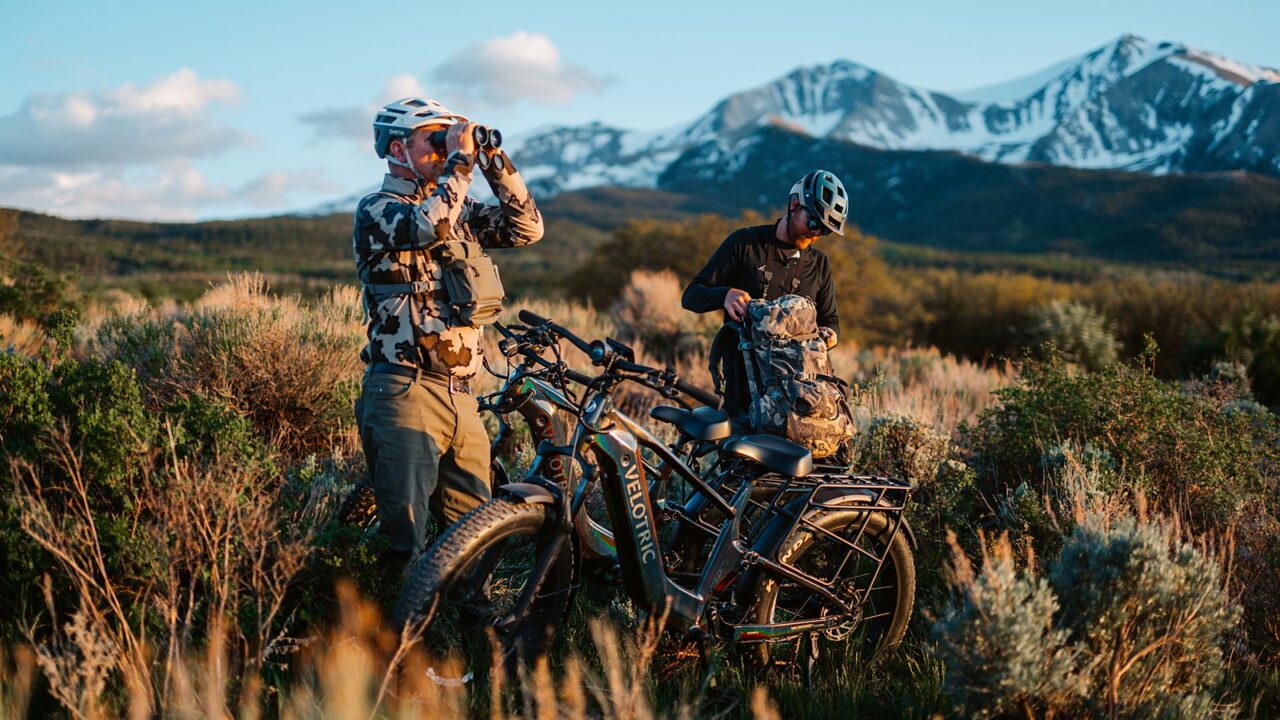
Velotric Nomad 2X vs GoMad: Off-Road Comfort or Cargo Utility? is written for outdoor and utility buyers deciding whether suspension or cargo layout solves the bigger problem. It is an editorial, specification-based buyer's guide, not a claim that Lucas Anderson personally tested every model or scenario. The analysis uses current official information for Velotric Nomad 2X, Velotric GoMad and concentrates on the decisions that remain after a shopper knows the motor and battery numbers.
Prices, bundles, inventory, software, and policies can change. The product pages and checkout observed during this August 2026 update are a snapshot, while Velotric's current page and the actual seller's written terms remain the final authority. That is why this guide separates stable ownership questions from temporary promotions.
The choice in one sentence
A useful comparison does not ask which bike has the longest feature list. It asks which differences change the same rider's route, storage, comfort, safety, and total cost often enough to justify choosing one over the other.
Questions this guide answers
- Chassis purpose
- Payload distribution
- Suspension
- Battery expansion
- Passenger use
- Transport
- Low-speed handling
- Decision rule
- Buyer questions
- Final recommendation
Current model snapshot
| Model | Official price checked | Useful specifications |
|---|---|---|
| Velotric Nomad 2X | $2,399 | 750W hub motor, 105Nm torque, 801.6Wh battery, up to 75 miles, 80 lb, 560 lb capacity |
| Velotric GoMad | $1,999 | 750W hub motor, 85Nm torque, 801.6Wh battery, up to 75 miles, 77 lb, 500 lb capacity |
Confirm current specifications, inventory, and included equipment on Velotric Nomad 2X official page, Velotric GoMad official page.

Chassis purpose
Nomad 2X is a full-suspension 26-inch fat bike; GoMad is a compact 20-inch utility bike with a long integrated rack. Tire width and suspension can improve control, but neither creates legal access or replaces conservative speed, correct setup, and surface-specific skill.
Ask the seller for a written answer when compatibility, capacity, warranty, or included hardware affects the purchase. Save the answer with the order because a photograph or general marketing sentence is not a model-specific commitment.
Walk or map the difficult portion of the normal route and record grade, surface depth, loose material, drainage, turns, and legal access. Then consider whether tire volume, gearing, motor placement, suspension, and braking address that exact problem. Broad labels such as all-terrain or off-road are too vague for a purchase decision.

Payload distribution
Nomad lists 560 pounds total and a 120-pound rack; GoMad lists 500 pounds total and a 176-pound rack. Treat every published maximum as a limit under defined conditions, not as a daily operating target. Speed, load, wet surfaces, and unfamiliar handling should be introduced separately.
The practical comparison should include the completed bike, not an empty showroom setup. Locks, bags, passenger hardware, fenders, mirrors, alternate posts, and transport equipment can change weight, fit, clearance, and cost.
Confirm the lowest applicable component rating and the rider's ability to control the loaded bicycle, not just the large total-payload number in a specification table. Braking distance, tire pressure, rack limits, passenger hardware, local rules, and the distribution of weight can become limiting before the frame's headline capacity is reached.
Suspension
Nomad's 120mm fork and rear air shock target repeated rough terrain, while GoMad's 100mm fork supports loaded urban and mixed-surface use. Treat every published maximum as a limit under defined conditions, not as a daily operating target. Speed, load, wet surfaces, and unfamiliar handling should be introduced separately.
For Velotric Nomad 2X, Velotric GoMad, verify this point using the exact frame, configuration, and included equipment being purchased. Product-family assumptions can hide differences in model year, size, accessory rating, or software behavior.
Write a progression plan before the first busy-road ride. It should include low-assist starts, controlled stops, emergency braking, shoulder checks, tight turns, hill starts, and any cargo or passenger setup in a quiet practice area. Add only one new source of speed, load, traffic, or poor traction after the previous step feels repeatable.

Battery expansion
both start near 801.6Wh, but GoMad officially supports a second-battery configuration for longer utility days. Plan from the hardest normal day and keep a reserve until several real rides establish personal consumption. Do not schedule a necessary trip around the best-case maximum.
Turn this into a test for outdoor and utility buyers deciding whether suspension or cargo layout solves the bigger problem: reproduce the normal route or ownership task, use representative cargo and clothing, and record what is easy or difficult before increasing speed or assistance.
Compare distance claims only after matching speed, assist, rider effort, terrain, temperature, tires, and load. A smaller efficient city bike can post a long laboratory maximum, while a high-capacity fat bike may consume more energy doing harder work. Neither headline predicts a specific commute until the operating conditions are defined.

Passenger use
GoMad has a clearer passenger-accessory mission; Nomad's high total load does not automatically make its rack a passenger seat. Practice in a low-risk area and verify local rules before adding traffic, passengers, cargo, steep grades, or higher class settings.
Ask the seller for a written answer when compatibility, capacity, warranty, or included hardware affects the purchase. Save the answer with the order because a photograph or general marketing sentence is not a model-specific commitment.
Confirm the lowest applicable component rating and the rider's ability to control the loaded bicycle, not just the large total-payload number in a specification table. Braking distance, tire pressure, rack limits, passenger hardware, local rules, and the distribution of weight can become limiting before the frame's headline capacity is reached.
Transport
both are heavy, but Nomad's long 26 x 4-inch footprint and GoMad's extended rack create different hitch-rack compatibility problems. Keep purchase records, manuals, packaging during the return period, serial information, and written compatibility answers in one ownership file.
The practical comparison should include the completed bike, not an empty showroom setup. Locks, bags, passenger hardware, fenders, mirrors, alternate posts, and transport equipment can change weight, fit, clearance, and cost.
Trace the complete ownership path: delivery point, assembly space, charging outlet, overnight storage, daily lock location, cleaning area, service shop, and transport option for a disabled bike. A model that fits the route but cannot be moved through one of these steps will create friction on every week of ownership.

Low-speed handling
GoMad's compact wheels lower cargo but steer differently under load; Nomad's higher chassis rewards confident starts on loose ground. Practice in a low-risk area and verify local rules before adding traffic, passengers, cargo, steep grades, or higher class settings.
For Velotric Nomad 2X, Velotric GoMad, verify this point using the exact frame, configuration, and included equipment being purchased. Product-family assumptions can hide differences in model year, size, accessory rating, or software behavior.
Confirm the lowest applicable component rating and the rider's ability to control the loaded bicycle, not just the large total-payload number in a specification table. Braking distance, tire pressure, rack limits, passenger hardware, local rules, and the distribution of weight can become limiting before the frame's headline capacity is reached.
Decision rule
buy Nomad for terrain control and GoMad for recurring cargo or passenger jobs where the rack is the center of the purchase. Practice in a low-risk area and verify local rules before adding traffic, passengers, cargo, steep grades, or higher class settings.
Turn this into a test for outdoor and utility buyers deciding whether suspension or cargo layout solves the bigger problem: reproduce the normal route or ownership task, use representative cargo and clothing, and record what is easy or difficult before increasing speed or assistance.
Write a progression plan before the first busy-road ride. It should include low-assist starts, controlled stops, emergency braking, shoulder checks, tight turns, hill starts, and any cargo or passenger setup in a quiet practice area. Add only one new source of speed, load, traffic, or poor traction after the previous step feels repeatable.

Run the same-route comparison
Use identical tire pressure, assist class, saddle setup, and cargo on the same start, hill, stop, turn, and storage maneuver. A display bike configured more aggressively can feel better without being the better long-term choice.
Audit the price difference
Assign every price difference a repeated job. Battery, suspension, rack capacity, frame access, or security earns money only when it changes a normal ride. Leave room for a helmet, lock, setup, service, and necessary carrying equipment.
Use a five-year lens
Chains, cassettes, tires, brake pads, batteries, suspension, electronics, and shop access affect long-term value. Ask what the nearby service provider can diagnose and which model-specific parts it can obtain.
Test the inconvenient maneuver
The revealing comparison may be a doorway, elevator turn, curb, loading ramp, hitch rack, crowded bike room, or hill start rather than an open-road cruise. Repeat the maneuver with the normal lock and cargo attached, because the completed setup can change balance, width, and lifting effort.
Choose the reason in writing
Finish with one sentence: choose the first model because it solves a named repeated task better, or choose the second because the first model's extra capability creates more cost, weight, or maintenance than the rider will use. If that sentence cannot be completed, the test has not isolated the deciding difference.
Keep a one-page decision record
Make one row for each candidate and record the exact size, checkout configuration, ready-to-ride cost, measured fit, hardest-route result, storage result, nearby service option, and the feature that justifies any price difference. Use the same assumptions for both bikes. A blank cell means more verification is needed, not permission to award the point to the model with stronger marketing.
For Velotric Nomad 2X, Velotric GoMad, begin that record with chassis purpose and finish with decision rule. The buyer described here is outdoor and utility buyers deciding whether suspension or cargo layout solves the bigger problem, so the written decision should name the normal route and ownership constraint in plain language. Date the record, save the official page or written seller answer used for changing specifications, and revisit it before the return period closes. If the chosen bike fails a non-negotiable after delivery, address the mismatch promptly rather than trying to justify the purchase with a feature that was never part of the original need.
Continue the research
Use GoMad buying guide, Nomad 2X versus Nomad 2 to compare the fit, route, safety, and ownership questions from another angle before checkout.
Buyer questions
Why does chassis purpose matter before buying?
Nomad 2X is a full-suspension 26-inch fat bike; GoMad is a compact 20-inch utility bike with a long integrated rack. Confirm the current model specification and test the requirement in the real route, fit, or ownership setting rather than relying on the headline alone.
What should I verify about suspension?
Nomad's 120mm fork and rear air shock target repeated rough terrain, while GoMad's 100mm fork supports loaded urban and mixed-surface use. Confirm the current model specification and test the requirement in the real route, fit, or ownership setting rather than relying on the headline alone.
Can transport change the best model?
both are heavy, but Nomad's long 26 x 4-inch footprint and GoMad's extended rack create different hitch-rack compatibility problems. Confirm the current model specification and test the requirement in the real route, fit, or ownership setting rather than relying on the headline alone.
How should a first-time buyer handle decision rule?
buy Nomad for terrain control and GoMad for recurring cargo or passenger jobs where the rack is the center of the purchase. Confirm the current model specification and test the requirement in the real route, fit, or ownership setting rather than relying on the headline alone.
Final recommendation
For outdoor and utility buyers deciding whether suspension or cargo layout solves the bigger problem, the best decision is the model or setup that satisfies the non-negotiable fit, route, storage, charging, legal, and service requirements with useful reserve. Choose capability only when it solves a repeated problem, and choose simplicity when extra weight, cost, or maintenance would be felt more often than the added feature.
Check the final configuration
Confirm size, color, included equipment, shipping, current price, and policy on the official Velotric Nomad 2X page. Code REF601753 may provide $60 off when eligible; Velotric’s current checkout and terms are the final authority.